




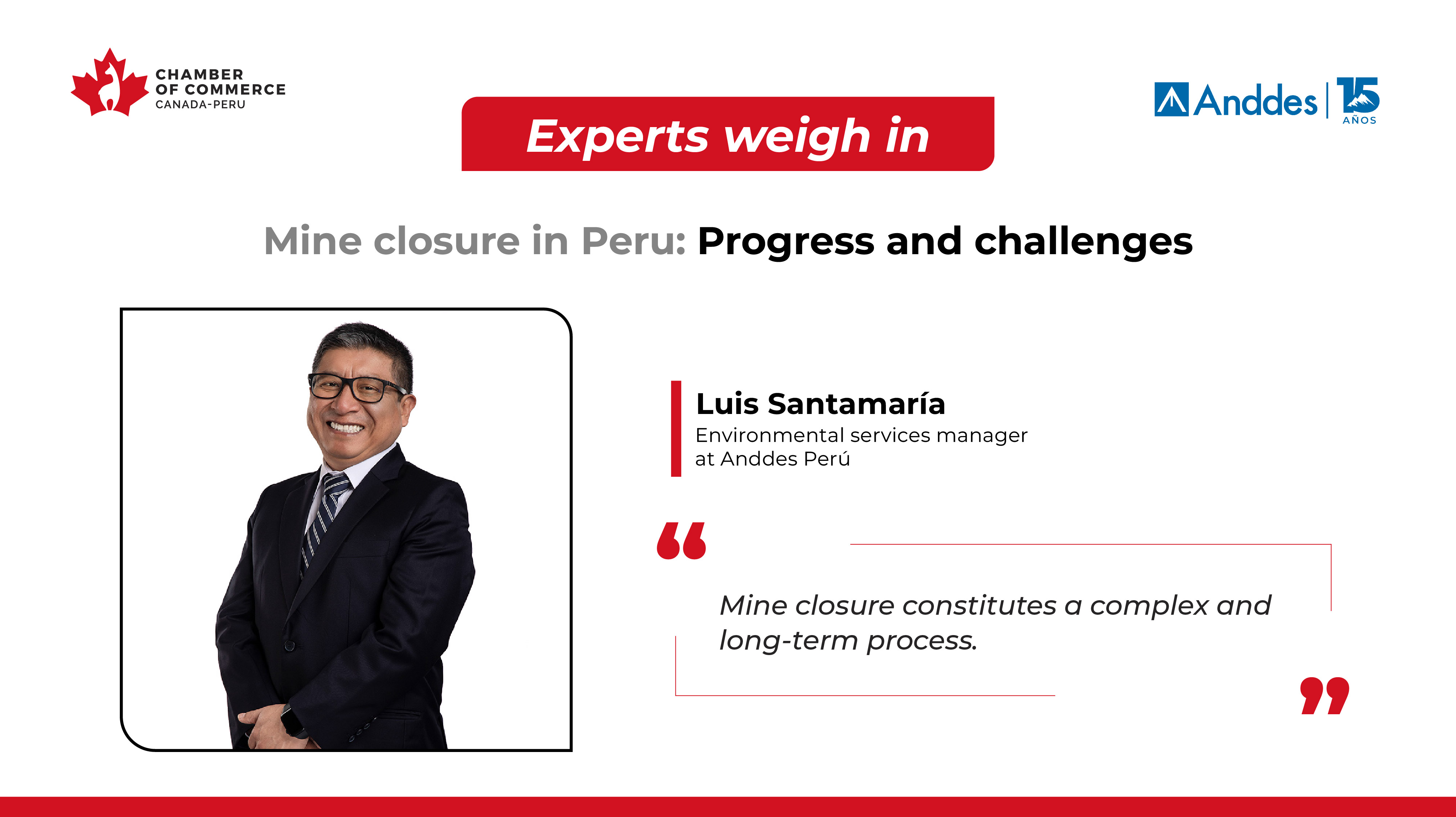
Mine closure in Peru: Progress and challenges
On October 14, 2003, Law No. 28090, which regulates mine closure in Peru, was enacted, establishing the obligations of mining operators during the closure stage of their operations. In 2005, its implementing regulations were issued through Supreme Decree No. 033-2005-EM, which established the procedure for the submission and approval of Mine Closure Plans, defined the objectives to be achieved, specified that the engineering design of the plan must be developed at the feasibility level, and incorporated the criteria for determining and providing the financial guarantees required to support its implementation. These provisions have been complemented by other environmental regulations that have progressively strengthened the regulatory framework for mine closure in the country.
Over the years, the implementation of this regulatory framework has generated diverse experiences regarding Mine Closure Plans. While these plans were initially regarded primarily as a legal compliance requirement, many companies now integrate closure considerations from the project design stage, recognizing their importance from the outset. However, to date, no mining projects have fully completed the closure process under Law No. 28090. This highlights the fact that mine closure is a complex and long-term process, representing a significant technical, environmental, and institutional challenge.
In this context, although the Peruvian regulatory framework requires the preparation and periodic updating of Mine Closure Plans, in practice these plans are often developed with a primary focus on meeting regulatory requirements. In contrast, international standards such as those promoted by the International Council on Mining and Metals (ICMM) and the Initiative for Responsible Mining Assurance (IRMA) advocate for a comprehensive approach to mine closure, integrating closure planning from the earliest stages of project development and throughout the entire mine life cycle.
Given the increasing complexity of mining projects, it is essential to move toward an approach that incorporates closure planning from the initial stages of the project life cycle, thereby going beyond a perspective focused predominantly on technical aspects. Consequently, updating and strengthening the technical and regulatory framework associated with mine closure in Peru remains a relevant priority.
The incorporation of this approach, aligned with international standards, would enable strategic closure planning from the early stages of project development, incorporating governance, sustainability, and long-term project vision criteria. This approach allows for its progressive integration throughout the operational life cycle, facilitating the systematic evaluation of risks and opportunities while strengthening decision-making through a comprehensive and adaptive closure management perspective.
At Anddes, we apply a specialized approach to mine closure management, supported by our experience in consulting, engineering, and construction services. Building on this expertise, we contribute to the development of strategies and solutions that integrate sustainability criteria in line with regulatory requirements and international best practices.
Authors
- Luis Santamaría, environmental services manager at Anddes Peru.
- Patricia Barros, environmental specialist at Anddes Peru.